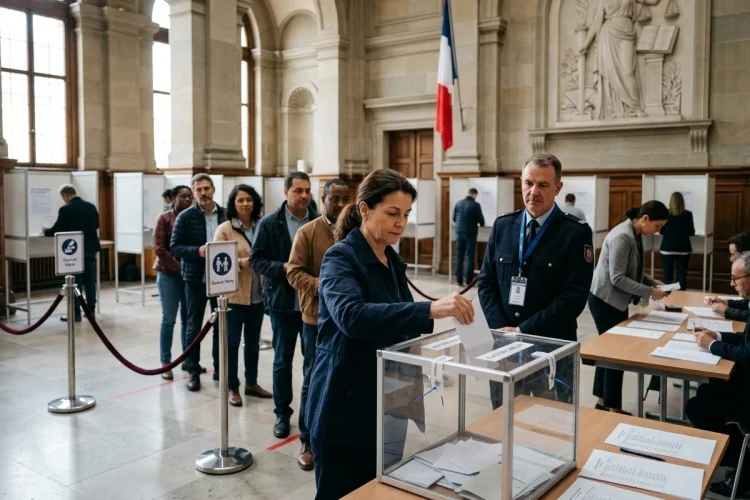
Elections can look simple from the outside. People register, candidates campaign, voters cast ballots, officials count the votes, and someone wins.
Behind that process, however, sits a complicated legal framework.
Election laws protect democratic systems by establishing rules about who can vote, who can run for office, how campaigns operate, how ballots are counted, and what happens when someone challenges the result.
Without clear rules, elections could become unpredictable, unfair, or vulnerable to manipulation.
International democratic standards recognize periodic and genuine elections based on universal and equal suffrage as an important expression of the people’s political will.
The International Covenant on Civil and Political Rights similarly protects citizens’ rights to participate in public affairs and vote in genuine periodic elections.
Good election laws cannot guarantee perfect democracy on their own. Institutions, political culture, independent courts, free media, and public trust also matter.
Still, strong legal rules provide the basic structure that allows democratic competition to take place fairly.
What Are Election Laws?
Election laws are the rules governing how elections are organized and conducted.
They can appear in constitutions, national election statutes, regulations, court decisions, and rules issued by electoral authorities. Different countries structure these laws differently depending on their political and constitutional systems.
Election legislation commonly covers voter registration, candidate eligibility, political parties, campaign finance, electoral districts, voting procedures, vote counting, election administration, observation, and complaints.
International IDEA identifies these areas as major components of a comprehensive electoral legal framework.
Think of election law as the rulebook for political competition.
A football match would be chaotic if teams could decide their own rules halfway through the game. Elections face a similar problem. Candidates, political parties, voters, and officials need to know the rules before competition begins.
Election Laws Protect the Right to Vote
One of the most important functions of election law is protecting voting rights.
Democratic systems are based on the idea that eligible citizens should have a meaningful opportunity to participate in choosing their representatives.
International human rights standards emphasize universal and equal suffrage.
Article 25 of the International Covenant on Civil and Political Rights states that citizens should have the right and opportunity to vote and be elected in genuine periodic elections without unreasonable restrictions.
Election laws put these principles into practice.
They determine eligibility requirements, voter registration procedures, polling locations, voting methods, identification requirements, accessibility standards, and deadlines.
Access Matters as Much as the Right Itself
A legal right to vote means little if people cannot realistically exercise it.
Imagine a voter legally qualifies to participate but cannot register because the registration system is inaccessible or unclear.
A well-designed electoral framework should therefore make participation possible while still maintaining reliable voter records.
Election laws must balance two legitimate goals: ensuring eligible citizens can vote while protecting the integrity of voter registration and balloting.
Election Laws Create Fair Political Competition
Democracy requires more than simply allowing people to put ballots into boxes.
Voters need genuine choices.
Election laws therefore regulate how candidates and political parties qualify for the ballot and how political competition takes place.
For example, rules may establish nomination requirements, candidate eligibility, campaign periods, access to media, political advertising standards, and party registration procedures.
If the rules heavily favor the party already in power, elections may technically occur without offering truly competitive political choice.
International IDEA notes that credible elections require political competitors to be able to compete under fair conditions, supported by impartial election administration.
Fairness does not mean every candidate receives identical popularity, money, or media attention.
It means the legal framework should not arbitrarily prevent legitimate political competitors from participating or give government authorities unchecked power to exclude opponents.
Campaign Finance Rules Promote Transparency
Modern election campaigns can involve enormous amounts of money.
Candidates may spend funds on advertising, staff, travel, events, digital campaigns, research, and voter outreach.
Without rules, voters might have little idea who is financing political campaigns or whether wealthy donors are exercising unusual influence.
That is where campaign finance laws come in.
Depending on the country, these rules may regulate political donations, require disclosure of campaign income and spending, establish spending limits, restrict certain sources of funding, or provide public financing.
The exact model varies considerably.
Campaign finance regulation is included among the core areas that international electoral standards recommend addressing in national legal frameworks.
Transparency is especially important.
Knowing who financially supports a political campaign can help journalists, watchdog organizations, and voters evaluate possible conflicts of interest or sources of political influence.
Electoral District Rules Can Affect Representation
In electoral systems that divide countries into geographic constituencies, someone has to decide where those boundaries go.
This process is often called districting or boundary delimitation.
It may sound technical, but boundaries can significantly affect political representation.
Imagine a city with two equally sized political groups.
If electoral districts are deliberately drawn to concentrate most supporters of one group into a small number of districts, the other group could gain more seats even if overall voter support is relatively balanced.
Election laws can reduce such risks by establishing objective criteria for drawing boundaries.
These rules may consider population equality, geographic coherence, administrative boundaries, minority representation, and independent review.
International electoral standards specifically identify boundary delimitation as an important part of the legal framework for democratic elections.
The goal is not to create perfectly neutral political geography-that can be difficult-but to prevent arbitrary manipulation of electoral boundaries.
Independent Election Administration Builds Trust
Someone has to organize the election.
That organization may need to register voters, approve candidates, distribute ballots, operate polling stations, train officials, count votes, and announce results.
These responsibilities make electoral management bodies extremely important.
If voters believe election officials are controlled by one candidate or political party, even an accurately counted result may face public suspicion.
International IDEA emphasizes that credible elections require impartial administration and examines institutional independence as an important safeguard for electoral management bodies.
Different countries use different models.
Some have highly independent national election commissions. Others distribute responsibilities among government agencies, local authorities, courts, and independent institutions.
Whatever model is used, transparency and impartiality are crucial.
Election officials should administer established rules consistently rather than adjusting procedures to help preferred political competitors.
Election Laws Protect Ballot Secrecy and Accurate Counting
Casting votes is only half the election.
Those votes also need to be protected, counted, and reported accurately.
Election laws establish procedures for ballot design, polling stations, ballot boxes, electronic voting systems, absentee voting, vote counting, recounts, and the publication of results.
The principle of a secret ballot is particularly important.
Voters should generally be able to choose candidates without employers, government officials, political parties, or other individuals knowing how they voted.
International human rights standards explicitly connect genuine elections with secret voting procedures and the free expression of voters’ will.
Transparent counting procedures matter as well.
Candidate representatives, election observers, journalists, or other authorized participants may be allowed to observe different stages of counting depending on national law.
Clear procedures make it harder to secretly alter results and easier to identify genuine mistakes.
Election Observers Add Another Layer of Accountability
Election laws can also provide a role for independent observers.
Observers do not normally decide who wins an election. Instead, they monitor whether electoral procedures follow applicable laws and democratic standards.
Observation can cover much more than election day.
The OSCE Office for Democratic Institutions and Human Rights examines the legal framework, election administration, campaigns, media environment, complaint procedures, voting, counting, tabulation, and announcement of results as part of its election observation methodology.
This broader approach matters because problems can occur months before people vote.
Unfair candidate exclusions, inaccurate voter lists, misuse of public resources, restrictions on political campaigning, or biased media rules can influence an election long before ballots are counted.
Election observation therefore helps evaluate the entire electoral cycle.
Election Dispute Rules Help Prevent Political Crises
Close elections can produce disagreements.
A candidate may argue that certain ballots were improperly rejected. A political party might challenge candidate eligibility, vote counting, campaign violations, or decisions made by election officials.
A democratic system needs peaceful methods for dealing with these disputes.
Election laws therefore establish complaint and appeal procedures.
Depending on the country, challenges may be handled by electoral commissions, specialized election tribunals, ordinary courts, constitutional courts, or combinations of these institutions.
Clear deadlines are especially important.
Election disputes often need to be resolved quickly because governments cannot remain uncertain indefinitely about who legally holds office.
International electoral frameworks recognize complaints, appeals, legal enforcement, and dispute resolution as essential elements of credible elections.
When political competitors trust legal institutions enough to use formal challenges instead of violence, election law contributes directly to democratic stability.
Modern Election Laws Must Address New Threats
Election integrity is no longer only about ballot boxes.
Digital campaigning, cybersecurity, artificial intelligence, disinformation, foreign interference, online political advertising, and attacks on election infrastructure have created new challenges.
International IDEA notes that electoral institutions now operate in an environment affected by political interference, digital developments, extreme weather, and other threats that can damage election credibility.
Its 2026 Integrated Framework for Protecting Elections treats legal safeguards as one of the core defenses against threats to electoral integrity.
These safeguards can prohibit election-related violence, malicious interference, and other misconduct while defining appropriate institutional responsibilities and penalties.
Election laws therefore need to evolve.
The challenge is creating protections against genuine manipulation without unnecessarily restricting political debate, journalism, opposition activity, or freedom of expression.
That balance is likely to remain one of the biggest election-law issues in modern democracies.
Why Election Laws Matter for Democracy
Election laws cannot force citizens to trust politicians, guarantee good leadership, or eliminate political conflict.
What they can do is create predictable rules.
Citizens know how to register. Candidates know how to qualify. Parties understand campaign requirements. Officials know how votes should be counted. Courts know how disputes can be reviewed.
That predictability supports the rule of law.
It also makes it harder for political actors to change procedures simply because they dislike the likely outcome.
The United Nations describes periodic and genuine elections based on universal suffrage as an essential element of democracy and a way of expressing the political will of the people.
Good electoral rules help turn that principle into a functioning system.
Election laws protect democratic systems by creating clear rules for political participation, competition, voting, counting, oversight, and dispute resolution.
They protect voting rights, establish candidate requirements, regulate campaign finance, guide electoral boundaries, strengthen election administration, safeguard ballot secrecy, and create peaceful ways to challenge disputed results.
However, laws alone are not enough. Their effectiveness also depends on independent institutions, transparent administration, courts, civil society, political competitors, observers, journalists, and citizens who respect democratic procedures.
The next time an election takes place, look beyond who wins. Pay attention to how voters registered, how campaigns were regulated, how ballots were counted, and how disputes were resolved. Those processes reveal a great deal about the health of a democratic system.