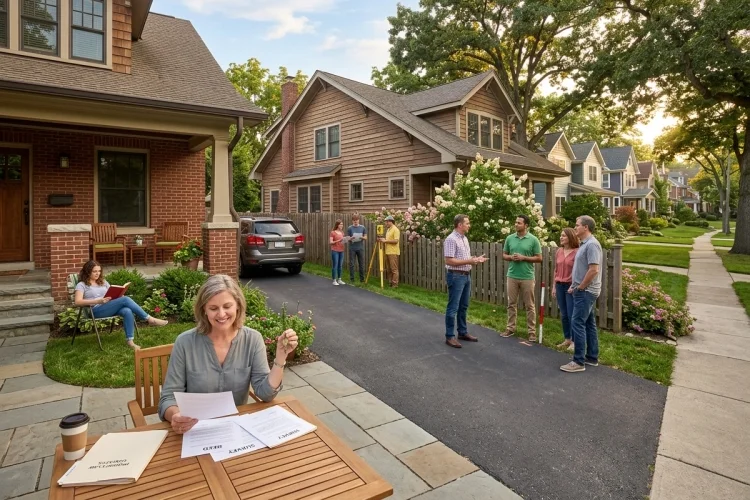
Owning a house seems simple: you buy it, receive the keys, and it becomes yours. But legally, property ownership is much more interesting than simply having physical control over something.
Who owns the driveway between two houses? Can a tenant exclude the landlord from an apartment? What happens when two siblings inherit the same property? Can someone ever gain ownership of land they do not originally own?
Questions like these belong to property law.
In simple terms, property law governs legal rights and interests involving things that can be owned, possessed, used, transferred, or controlled. Property can include land and buildings, movable objects such as vehicles, and even intangible assets such as intellectual property.
Cornell’s Legal Information Institute describes property as something capable of ownership, with owners generally having rights involving possession, use, transfer, and disposal.
U.S. property law is largely governed by state law, so specific rules vary. Still, several core concepts provide a useful foundation for understanding how ownership works.
What Is Property Law?
Property law is the area of law that defines people’s legal rights and responsibilities concerning property.
At first glance, this sounds like it is simply about determining who owns something. In reality, ownership contains several different legal rights.
An owner may have the right to possess property, use it, exclude other people from it, transfer it to someone else, or dispose of it. Cornell describes ownership as including legal rights to use, possess, and transfer property.
These rights are sometimes described as a bundle of rights.
Imagine you own a house but rent it to a tenant.
You still own the building, but the lease gives the tenant a temporary legal right to possess and use it. During the lease, your ownership and the tenant’s possession exist at the same time.
This example shows an important property-law principle: ownership, possession, and use are related, but they are not always the same thing.
Real Property vs Personal Property
One of the most fundamental distinctions in property law is between real property and personal property.
1. What Is Real Property?
Real property generally means land and things permanently attached to it.
That can include houses, commercial buildings, trees, and certain other permanent features. Cornell explains that real property includes land as well as permanent features above and below it.
Suppose you buy a house on five acres.
The land itself is real property. The house permanently attached to the land is generally part of that real property as well.
Real property is sometimes referred to as real estate, although property law deals with the legal interests in land rather than simply the physical property.
2. What Is Personal Property?
Personal property generally includes property that is not classified as real property.
A car, laptop, sofa, bicycle, or piece of jewelry would normally be personal property.
Property can also be tangible or intangible.
A smartphone is tangible because you can physically hold it. Intellectual property rights, such as copyrights and trademarks, are intangible because the legal asset does not exist as a physical object in the same way.
This distinction matters because different legal rules may govern land, movable goods, and intangible property.
Ownership, Title, and Possession Are Different
Three terms frequently appear in property law: ownership, title, and possession.
They sound similar, but they describe different ideas.
Ownership refers broadly to legal rights over property.
Title generally refers to the legal basis of ownership. For real estate, title may be documented through deeds and public records. Cornell notes that title is distinct from possession and can provide documentary evidence of ownership.
Possession, meanwhile, focuses more on physical control, occupancy, or the ability to control property.
Imagine you rent a car for one week.
You physically possess and use the vehicle, but the rental company remains its owner.
The same principle applies to a rented apartment. A tenant may have the right to occupy the property even though the landlord holds title.
Understanding this difference is essential because many property disputes concern not simply “who owns this?” but who currently has which rights over it?
Property Ownership Can Be Shared
Property does not always belong to one person.
Two or more people can own the same property through forms of co-ownership.
Two common arrangements are tenancy in common and joint tenancy.
1. Tenancy in Common
A tenancy in common allows multiple owners to hold separate ownership shares in the same property.
Those shares do not necessarily have to be equal.
Suppose Maria owns 60% of a vacation house and Daniel owns 40%.
Both may still have rights to use the entire property even though their financial ownership shares differ. If Maria dies, her share normally passes according to her estate rather than automatically becoming Daniel’s property.
2. Joint Tenancy
A joint tenancy works differently because it traditionally includes a right of survivorship.
If two people own property as joint tenants and one dies, the deceased owner’s interest generally passes to the surviving joint tenant rather than through the deceased person’s estate.
Cornell identifies this right of survivorship as the major distinction between joint tenancy and tenancy in common.
The exact requirements for creating and ending these ownership arrangements vary by state.
That is why the wording used when property is transferred can have major consequences years later.
What Is an Estate in Property Law?
The word estate does not only mean the property someone leaves behind after death.
In property law, an estate can describe the type and duration of someone’s legal interest in land.
One of the strongest ownership interests is fee simple absolute.
This is generally an ownership interest of potentially unlimited duration that can be transferred and inherited. Cornell describes fee simple absolute as the most complete freehold ownership interest recognized in real property.
Another example is a life estate.
A life estate gives someone the right to possess property for the duration of a specified person’s life.
Imagine a parent transfers a house so that a relative has the right to live there for life, after which ownership passes to another family member.
Property law therefore allows ownership interests to be divided not only between people, but also across time.
One person can have a present right to use property while another person holds a future interest.
How Do Leases Create Property Rights?
Renting property creates another important type of legal relationship.
A lease is an agreement in which an owner, known as the lessor or landlord, gives another person-the lessee or tenant-the right to possess and use property for a certain period, usually in exchange for rent.
Suppose a landlord rents an apartment to a tenant for one year.
The landlord keeps ownership, but the tenant receives a legal right of possession during the lease term.
This distinction has practical consequences.
A landlord generally cannot treat a rented apartment exactly as if nobody else had legal rights to it. Landlord-tenant laws and the lease agreement establish rules involving access, rent, maintenance, repairs, termination, and eviction.
Leases are also not limited to homes.
Businesses regularly lease offices, warehouses, equipment, vehicles, and other property.
Property law and contract law therefore frequently overlap.
What Is an Easement?
Sometimes a person has a legal right to use someone else’s land without owning or possessing it.
That right may be an easement.
Cornell defines an easement as a nonpossessory property interest allowing someone to use another person’s land in a particular way.
A common example involves access.
Imagine your house sits behind another property and the only road connecting your home to the public street crosses your neighbor’s land.
You might have an easement giving you a legal right to use that road.
The neighbor still owns the land. You do not gain general ownership simply because you can cross it.
Easements can arise in different ways, including express agreements, implication, necessity, and certain long-standing uses.
They can also become extremely important when buying real estate.
A beautiful piece of land may be much less useful if another person has significant access rights across it-or if the land itself has no legal access to a public road.
What Is Adverse Possession?
One of the strangest concepts for beginners is adverse possession.
Under certain circumstances, someone who possesses another person’s land without permission for a sufficiently long period can potentially acquire legal title.
But simply stepping onto someone else’s land does not make it yours.
Traditional adverse-possession requirements usually demand possession that is actual, open and notorious, exclusive, continuous, and hostile to the true owner’s rights for the period required by state law.
Here, “hostile” does not necessarily mean aggressive or violent.
It generally means the use occurs without the true owner’s permission.
Suppose a neighbor openly uses and maintains a strip of another person’s land as their own for many years. Whether that could eventually support adverse possession depends on the state’s requirements, including its statutory time period.
Those periods vary considerably.
This makes adverse possession a good example of why real-property questions often require state-specific legal research.
Property Rights Are Not Unlimited
Owning property does not mean you can legally do anything you want with it.
Property rights operate within broader laws.
Local zoning regulations may control whether land can be used for residential, commercial, industrial, or other purposes. Building codes can regulate construction. Environmental laws can restrict certain activities.
Property taxes can also create financial obligations.
Governments may even acquire private property for public purposes through eminent domain, subject to constitutional and statutory requirements concerning government takings and compensation.
Private restrictions can matter too.
Deeds, easements, leases, mortgages, homeowners’ association rules, and restrictive covenants may all affect how property can be used.
So when someone says, “It’s my land, so I can do whatever I want,” property law usually gives a more complicated answer.
Ownership provides powerful rights, but those rights exist inside a legal framework.
How Property Is Transferred
Property can change owners through several methods.
Someone may buy property, receive it as a gift, inherit it, or receive ownership through another legally recognized transfer.
For real estate, transfers commonly involve a deed identifying the parties and the property being transferred.
Recording systems also help establish a public record of interests in land.
This is one reason purchasing a home involves more than exchanging money and receiving keys.
Buyers may investigate title to determine whether another person claims ownership, whether mortgages or liens affect the property, and whether easements or other restrictions exist.
Property transfers involving expensive assets should be handled carefully because problems with title can create disputes long after the transaction occurs.
Why Property Law Matters in Everyday Life
Property law affects much more than buying houses.
It determines who can use land, who can exclude others, how property can be shared, what tenants and landlords may do, and how ownership changes hands.
It also affects families.
Marriage, divorce, inheritance, trusts, and estate planning can all involve major property questions.
Businesses depend on property law as well. Companies own or lease offices, machinery, vehicles, inventory, and intellectual property.
Even something as ordinary as letting a neighbor use your driveway can eventually raise legal questions about permission and property rights.
Property law therefore provides the legal structure behind one of society’s most basic questions:
Who has the right to control, use, and benefit from something?
So, what is property law? It is the area of law that governs ownership, possession, use, transfer, and competing interests in property.
Important concepts include the distinction between real and personal property, ownership and title, shared ownership, estates in land, leases, easements, and adverse possession. These rules help determine not only who owns something but exactly what rights each person has.
Because U.S. real-property law is largely governed at the state level, specific requirements can differ significantly between jurisdictions.
If you want to understand property law more deeply, explore real property, landlord-tenant law, easements, deeds, adverse possession, and joint ownership next. Those topics reveal just how many different rights can exist in a single piece of property.